












In today’s interconnected trade environment, international shipping requires precise coordination across multiple countries, carriers, and regulations. A global logistics provider plays a central role in managing these complex supply chain routes efficiently and reliably. In addition, EVERGRAND focuses on building structured logistics systems that help businesses move goods smoothly across borders with better visibility and control.
Route Planning and Network Optimization
A global logistics provider begins route management with detailed planning. First, it analyzes shipping demand, destination regions, and transportation infrastructure. Then, it selects the most efficient combination of air, sea, rail, or road transport. Furthermore, advanced routing software helps optimize cost and transit time simultaneously. As a result, shipments move through the most efficient paths while avoiding unnecessary delays. In addition, logistics providers continuously update route data based on seasonal demand and port congestion.
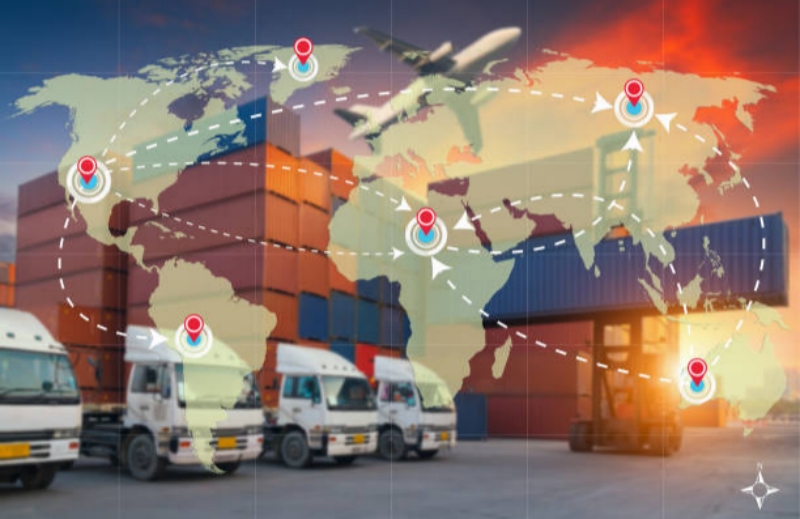
Multi-Country Coordination System
| Process Stage | Function | Benefit |
|---|---|---|
| Origin Handling | Collect and prepare goods | Faster dispatch |
| Export Clearance | Manage customs paperwork | Smooth border exit |
| Transit Routing | Coordinate multi-country transport | Reduced delays |
| Import Clearance | Handle destination customs | Faster delivery |
| Final Delivery | Last-mile distribution | Better customer satisfaction |
Moreover, a global logistics provider synchronizes all these stages through centralized tracking systems. As a result, businesses gain better visibility across the entire supply chain.
Customs Management and Compliance
Furthermore, international shipping involves strict customs regulations. A global logistics provider manages documentation, tariff classification, and compliance checks for each country. In addition, digital customs platforms help reduce manual errors and speed up clearance processes. As a result, shipments move more efficiently across borders with fewer interruptions. Moreover, EVERGRAND integrates compliance monitoring tools to ensure smooth cross-border operations.
Real-Time Tracking and Data Integration
In addition, visibility plays a key role in multi-country logistics. A global logistics provider uses real-time tracking systems to monitor shipments across different regions. As a result, companies can access live updates on location, status, and estimated delivery times. Furthermore, data integration systems connect warehouses, carriers, and customs offices into one unified platform. Therefore, decision-making becomes faster and more accurate throughout the supply chain.
Risk Management Across Borders
Moreover, global shipping routes face risks such as weather delays, port congestion, and regulatory changes. A global logistics provider evaluates these risks and adjusts routes proactively. In addition, contingency planning allows rerouting shipments when disruptions occur. As a result, supply chain stability improves even under uncertain conditions. Furthermore, advanced forecasting tools help reduce unexpected interruptions.
Technology-Driven Logistics Coordination
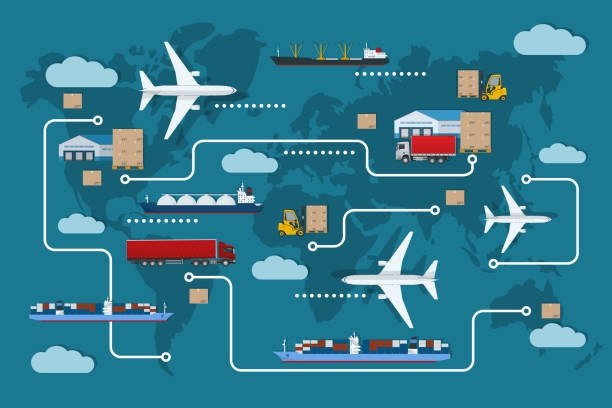
Furthermore, modern logistics depends heavily on technology integration. A global logistics provider uses AI-based routing systems, cloud tracking platforms, and automated warehouse management tools. In addition, these technologies improve coordination between different countries and transportation modes. As a result, global shipping becomes more efficient and scalable. Moreover, EVERGRAND applies digital logistics solutions to support end-to-end route management.
Conclusion: Smarter Systems Enable Global Movement
In conclusion, managing multi-country shipping routes requires precise coordination, advanced technology, and strong compliance control. A global logistics provider ensures that every stage—from planning to delivery—works seamlessly across borders. Ultimately, EVERGRAND helps businesses simplify global transportation by improving efficiency, visibility, and reliability in international logistics networks.